

Construction Knowledge Centre
Practical Construction Knowledge for Homeowners
Explore Core Construction Disciplines
Essential knowledge organized by key construction domains:
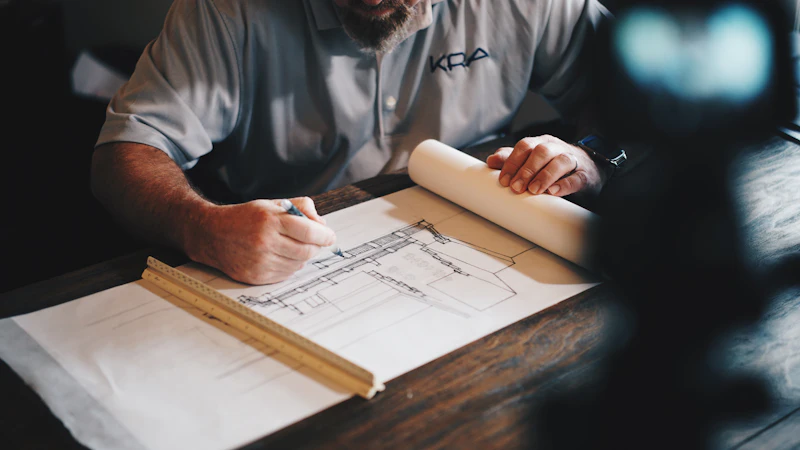
Construction Planning
Understand what should happen before construction begins — from drawings and permissions to budgeting.

Foundation & Structure
Learn how foundations, columns, beams, slabs and staircases are designed and constructed safely.

Construction Quality
Understand what homeowners should inspect at every stage — from concrete cubes to brick bonds.

Building Materials
Learn about cement grades, steel bar specs, M-sand vs river sand, bricks, and waterproofing admixtures.

Electrical & Plumbing
Understand concealed services and pressure testing before walls and floors are closed permanently.
Waterproofing
Learn where waterproofing is necessary and how common leakages, dampness, and seepage can be prevented.

Finishing Works
Practical homeowner guidance on plastering, vitrified flooring, primer/putty, doors, and window detailing.

Construction Cost
Understand where money is spent during construction and how to budget effectively with zero hidden expenses.

Common Construction Defects
Learn why cracks, leakage, dampness, and tile failures occur and how proper construction prevents them.
20 Essential Construction Articles
Practical guides drafted by GS Construction engineers for prospective homebuilders:
1. Complete House Construction Stages — From Planning to Handover
Building a residential home is an orchestrated engineering journey comprising 13 distinct, interdependent milestones. Learn what happens at each stage from soil testing to keys handover.
2. House Construction Checklist for Homeowners
A practical, chronological checklist of decisions, drawings, documentation, and on-site verification milestones every homebuilder must track.
3. What to Check Before Foundation Concrete
The foundation carries the entire dead and live load of your home into the earth. Review the mandatory pre-pour inspection checkpoints before the concrete truck arrives.
4. RCC Column Reinforcement — What Homeowners Should Know
Columns are the primary vertical load-bearing spines of your building. Learn how vertical steel, lateral ties, lap zones, and cover blocks work together.
5. Beam Reinforcement Checklist Before Concreting
Beams transfer floor and wall loads horizontally onto columns. Follow this structural engineer checklist to inspect top bars, bottom tension steel, stirrups, and shuttering.
6. Slab Reinforcement Checklist Before Concrete
Casting the roof slab is the biggest milestone of any home construction. Learn what to check on the rebar grid, electrical conduits, cover chairs, and shuttering before pouring.
7. Why Concrete Curing Is Important (Hydration & Durability)
Concrete does not dry to become hard — it hydrates chemically. Discover why 14-day water ponding is required to achieve full compressive strength and prevent cracking.
8. M-Sand vs River Sand for House Construction
An unbiased technical comparison of Manufactured Sand (M-Sand), Plastering Sand (P-Sand), and River Sand covering compressive strength, silt content, and cost.
9. How to Check Brickwork Quality on Site
Meticulous brickwork guarantees vertical walls, structural stability, and crack-free plastering. Learn the 5 tests every homeowner can perform in 10 minutes.
10. Electrical Conduit Checklist Before Plastering
Once plaster is applied, altering electrical points requires expensive wall chipping. Verify conduit depths, GI box alignment, circuit separation, and earthing paths.
11. Plumbing Checklist Before Concealing Pipes
A leaking concealed water pipe can ruin wall paint and ruin furniture. Discover the mandatory hydrostatic pressure testing protocol before closing any plumbing wall chase.
12. Bathroom Waterproofing — Complete Homeowner Guide
Bathrooms are the number one source of ceiling dampness and tile debonding. Learn the correct 5-step sunken slab waterproofing protocol and 48-hour ponding test.
13. Terrace Waterproofing — Common Mistakes to Avoid
Roof terraces endure extreme thermal expansion, UV radiation, and monsoon downpours. Avoid these 5 common mistakes that cause ceiling seepage and paint blistering.
14. How to Check Plastering Quality (Line, Level & Bonding)
Smooth, vertical plastering is the canvas for all your luxury interior paint finishes. Learn how to verify line, level, right angles, and eliminate hollow plaster.
15. How to Check Tile Laying Quality (Lippage, Slope & Grout)
Large format vitrified tiles and Italian marble demand laser alignment and hollow-free adhesive beds. Follow this checklist to inspect your floor and wall tiling.
16. Common Reasons for Cracks in Buildings & Prevention
Not all cracks are structural, but every crack has an engineering cause. Learn how to distinguish harmless hairline plaster crazing from severe structural settlement cracks.
17. How Much Steel Is Used in House Construction?
Steel reinforcement represents nearly 18% to 22% of your entire civil construction budget. Learn the exact thumb-rules to estimate total TMT bar consumption per square foot.
18. How Much Cement Is Required for Building a House?
Cement is the glue that binds concrete and mortar. Calculate the exact bag count needed for foundation, columns, brickwork, and plastering for your built-up area.
19. Construction Cost Breakdown for a New Home
Where does your construction money really go? Review the realistic budget allocation across civil structure, architectural finishes, MEP services, and approvals.
20. 50 Questions to Ask Your Builder Before Construction Begins
The ultimate due diligence questionnaire covering structural warranties, payment milestones, material specifications, delays, and stage sign-offs.